Birmingham has more large conference space than anywhere in the UK outside London, and each venue photographs quite differently. After fifteen years working across most of them, here's what I've learned about the rooms themselves.
At a glance
- Big auditoriums need planning for the wide shot — access matters more than kit.
- Modern venues often have strong coloured lighting, which changes how people look.
- Historic rooms are beautiful but usually darker than they appear.
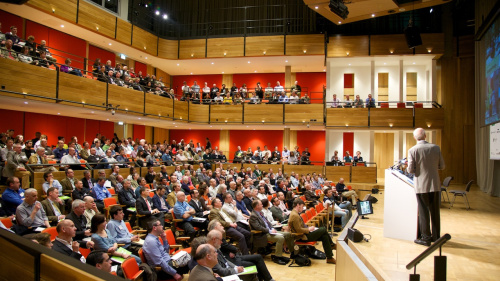
- Ask about access to balconies and galleries — it's where the best room shots come from.
The big halls: the ICC, the NEC and the Vox
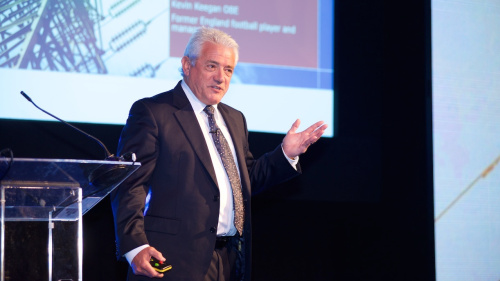
Large purpose-built spaces are straightforward to work in but need thought about vantage points. The full-room shot that marketing teams want almost always comes from a raised position — a balcony, a gallery, or the back of a tiered auditorium — so it’s worth asking the venue in advance whether that access is available. Stage lighting is generally good, though it can be very contrasty between a lit speaker and a dark room.
Modern spaces: Eastside Rooms and the newer venues
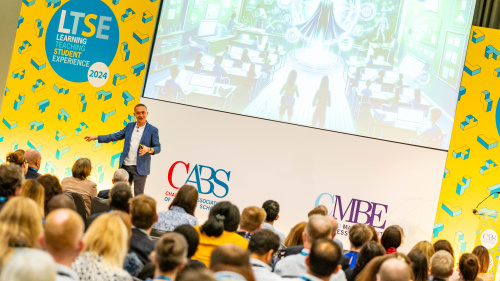
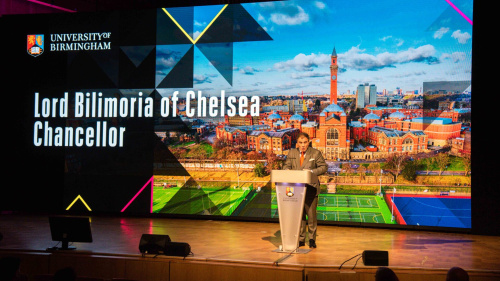
Newer venues tend to have strong architectural lighting and a lot of colour, which looks striking in the room and can be less flattering on faces. It’s usually manageable, and where a session really matters it’s worth asking whether the wash can stay reasonably neutral during presentations.
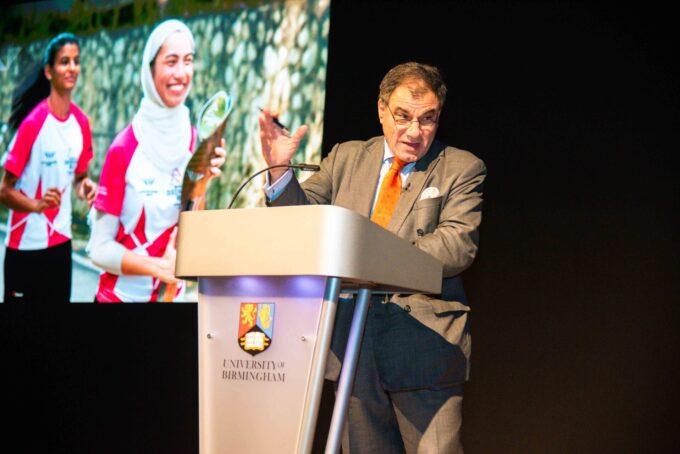
Modern venues look striking — but coloured lighting changes how everyone photographs.
Historic and university settings
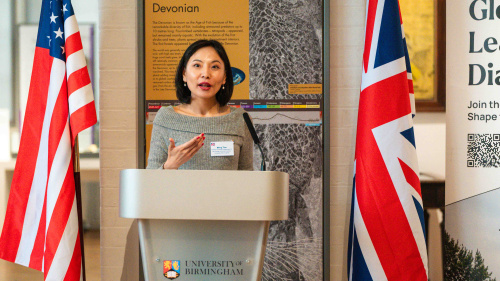
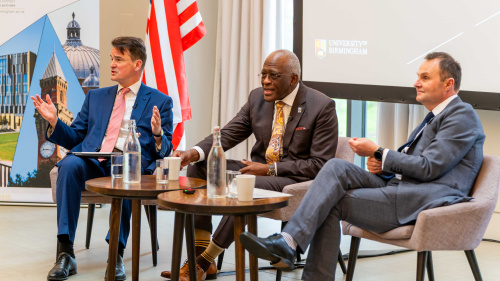
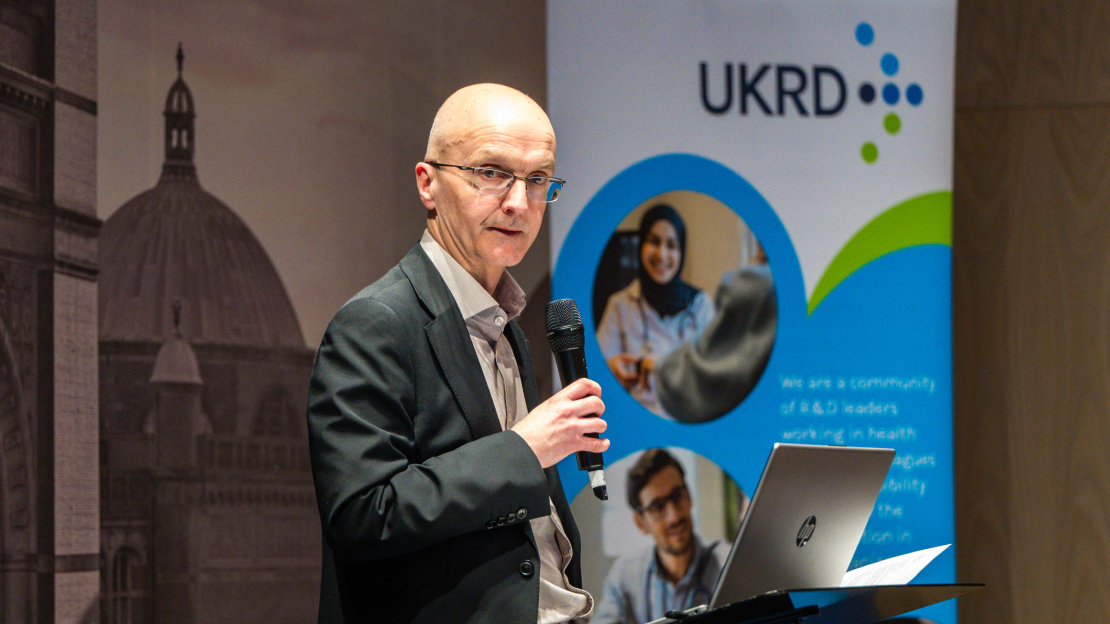
The University of Birmingham’s rooms, Symphony Hall and similar spaces are lovely to photograph and give a conference real character. They’re also frequently darker than they look, and often have restrictions on where you can stand during a session. Both are easy to work around once known in advance.
Hotel conference suites
Hotels like the Hilton Metropole and the Hyatt handle a large share of Birmingham’s conference business. Their suites are practical and flexible, though often low-ceilinged with mixed lighting. The advantage is convenience — everything from registration to the evening dinner happens under one roof, which makes for smoother coverage across a long day.
Knowing a room before you walk into it is most of the job.Nicola Gotts
Why venue knowledge matters
Arriving already knowing where the balcony access is, how the lighting behaves and where the good vantage points are means the coverage starts immediately rather than after an hour of working it out. If your conference is somewhere I haven’t shot before, I’ll arrange to see it beforehand — it’s simply part of how I plan conference photography.
Whichever venue you're using — see how conference coverage works.
Conference photography